Kaftan, abaya and jellabiya are often used loosely, especially in shops. They describe different garments with their own histories, although their meanings overlap.
The quick comparison
| | Kaftan | Abaya | Jellabiya | |---|---|---|---| | What | A robe or tunic | A loose over-garment | A loose traditional garment | | Associated with | West Asia, North and West Africa, and more | Middle East, North Africa, Horn of Africa | Egypt, also Sudan | | Typical cut | Often long-sleeved, ankle-length | Flowing, worn over clothes | Wide, usually collarless, long wide sleeves |
How to wear it: use the cut as your guide, not the label on the hanger.
Kaftan
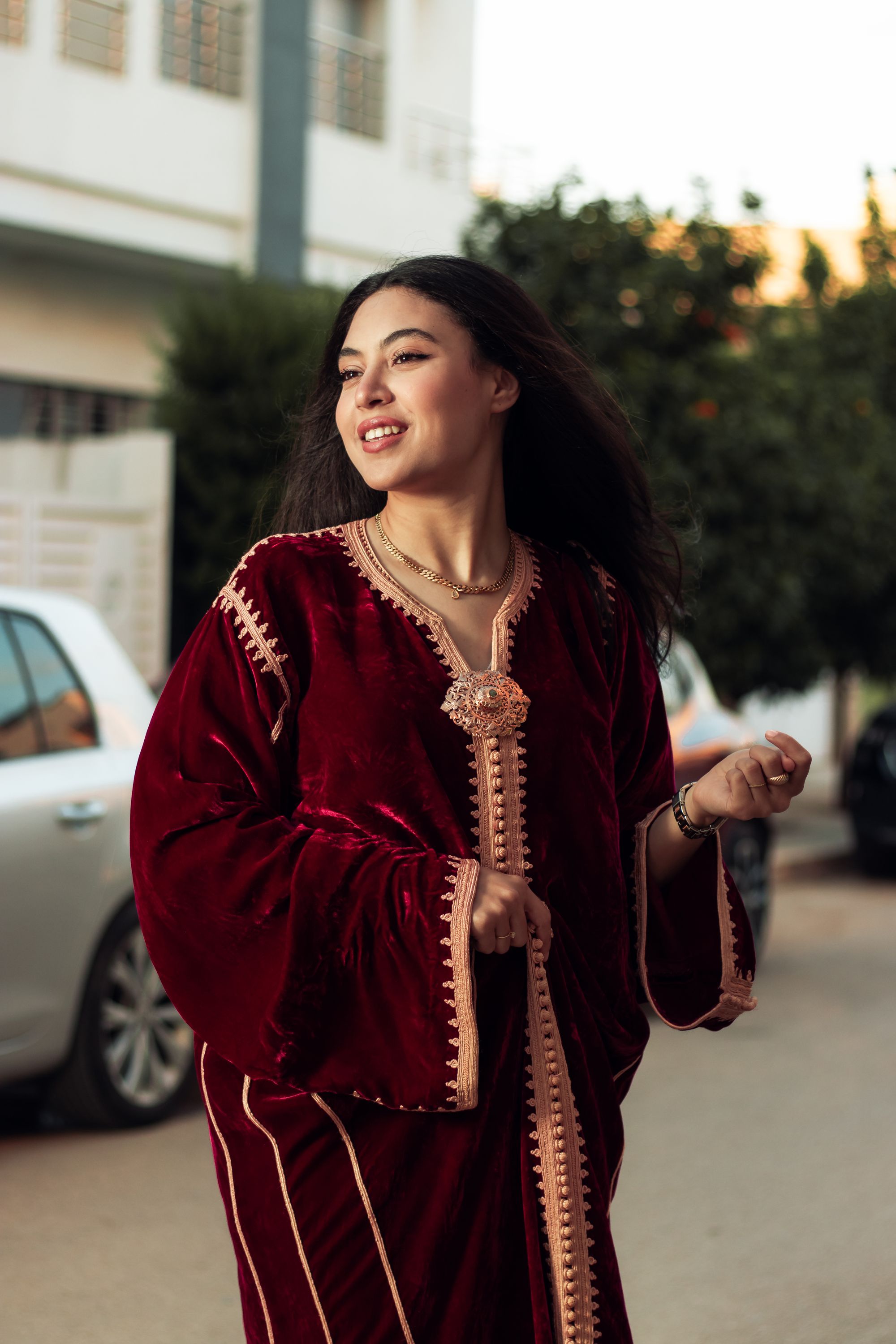
Wikipedia describes the kaftan (also caftan) as a variant of the robe or tunic that originated in West Asia. It is often long-sleeved and ankle-length, and may be worn as a coat or overdress. Many regions have their own forms:
- In Morocco, the kaftan is a one-piece fancy dress. The two-piece takchita, also called a mansouria, is worn with a wide belt.
- In West Africa, a kaftan can be a men's pullover robe worn with drawstring trousers.
- In Russia, the word refers to a men's long coat with tight sleeves.
The Moroccan takchita
The takchita is worn for celebrations, particularly weddings. It has two layers: an inner piece (tahtiya) and a richly decorated outer one (dfina, also called fouqia or mansouria), often with embroidery, beading or sequins. A matching belt, the m'damma, is frequently added and may be very ornate.
How to wear it: let the embroidery lead, choose a belt that sits at the natural waist and keep jewellery harmonious.
Abaya
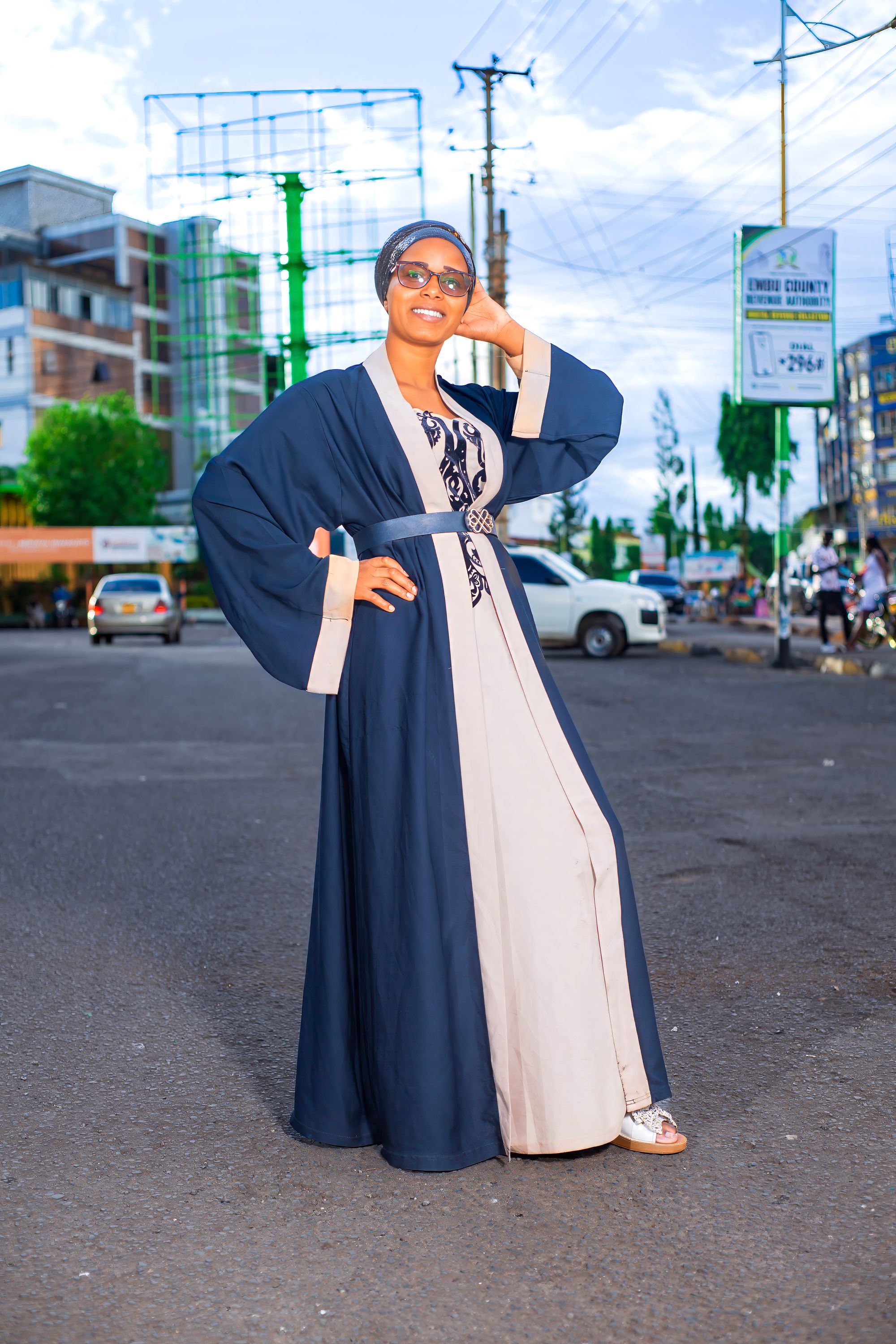
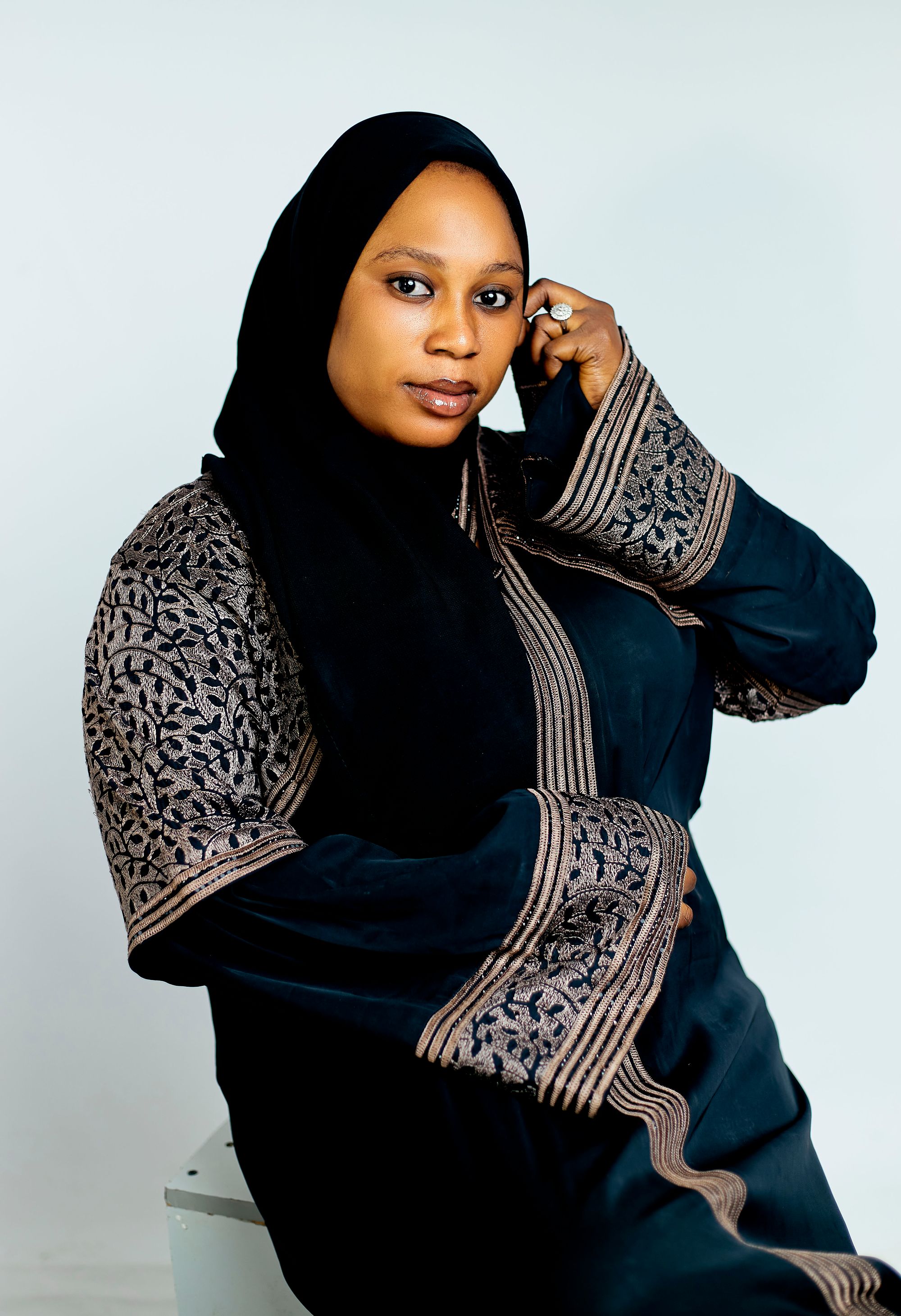
The abaya is a simple, loose over-garment, essentially a robe-like dress, worn by some women across the Middle East, North Africa and parts of the Horn of Africa. Traditional abayas are usually black: either a large draped square of fabric or a long kaftan shape. Modern versions are often kaftan cuts in crepe, georgette or chiffon, with embroidery or coloured trims. In some places, such as Indonesia, abayas are commonly kaftan-style, which shows how the words blend.
How to wear it: for a celebration, an embroidered or contrast-trimmed abaya with a matching headscarf looks elegant.
Jellabiya
The jellabiya (also jalabiya or galabeya) is a loose traditional garment from Egypt, described there as national clothing and particularly associated with farmers. Compared with the thawb worn in parts of the Gulf, it has a wider cut, typically no collar, and longer, wider sleeves. Women's Egyptian styles include a yoked, loose version and one with a defined waist; in Sudan it's often white.
Dressy jellabiyas with embroidery are sold as festive wear, particularly for gatherings at home.
Which should you wear to a wedding?
- Moroccan celebration: a kaftan or takchita suits the mood, if the hosts welcome traditional dress.
- Gulf or Arab wedding: many guests wear an elegant gown, sometimes with an abaya for arrival and departure. See our Arab wedding guide.
- Henna night: a colourful kaftan is comfortable and festive. See the henna night guide.
- Western wedding: an embroidered kaftan or flowing maxi can fit a semi-formal or beach wedding.
Always follow the dress code and the family's customs, and ask if you're unsure whether traditional dress is expected of guests.
Choosing fabric
Silk, satin, velvet and embroidered chiffon look formal. Cotton and light crepe suit daytime and warm weather. Velvet is lovely in winter but warm.
Fit
Loose doesn't mean shapeless. Check the shoulder seam and sleeve length, and make sure the hem clears the floor in your shoes. A belt changes the silhouette of a kaftan completely.
Styling
- Gold or silver jewellery that picks up the embroidery.
- A small clutch.
- Comfortable heels or embellished flats.
- A scarf, if the venue or custom asks for it.
Buying tips
Shops use the terms interchangeably, so read the description: is it open or closed at the front, one piece or two, belted or loose? Measure your height to get the right length and check return rules before ordering.
Care
Embroidery and beading need gentle handling. Store flat or on a padded hanger, and follow the care label, often dry cleaning.
Dressing respectfully
If you're wearing a garment from a culture that isn't yours, choose it for a real occasion, wear it neatly and ask hosts about any customs. Avoid treating it as a costume.
Common mistakes
- Choosing a beach cover-up labelled "kaftan" for a formal wedding.
- A hem that drags.
- Overloading a heavily embroidered piece with jewellery.
- Assuming one family's custom applies to all.
Sample outfits
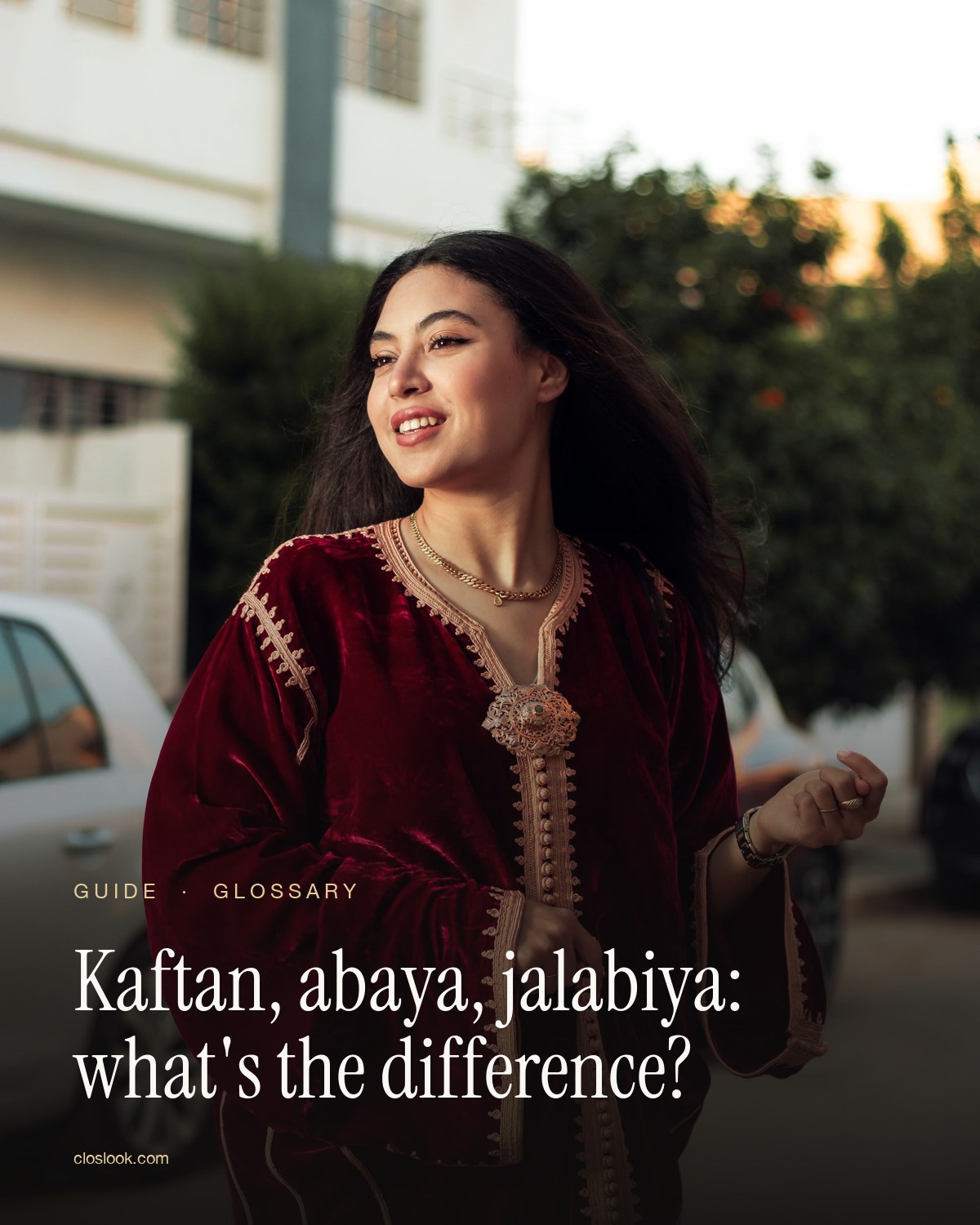
- Henna night: a burgundy velvet kaftan with gold earrings.
- Formal reception: a two-piece takchita with a belt and metallic heels.
- Daytime gathering: a pale embroidered abaya and a satin scarf.
- Home celebration: an embroidered jellabiya with flat sandals.
Colour and trim
Deep shades such as burgundy, emerald and navy flatter embroidery, while white and ivory may read as bridal at some weddings, so ask before choosing them. Contrast trim down the front draws the eye vertically.
For men
Men's long robes carry their own names and styles in different countries. If hosts invite traditional dress, ask what is worn locally; otherwise a suit or smart shirt and trousers is a safe choice.
How to tell them apart in a shop
Hold the garment up. If it opens at the front and is meant to be layered over clothes, it's likely sold as an abaya. If it's a single closed robe with embroidery around the neckline, it's often sold as a kaftan. If it's wide, collarless with generous sleeves and a simple shape, it may be labelled jalabiya. Labels differ by retailer, so look at photos from the front and back.
Outfit planning around each
A kaftan is a complete outfit: add shoes and jewellery. An open abaya needs something underneath, such as a simple long dress or trousers and a top, and the layer is part of the look. A jalabiya can be worn alone, with a belt if you want more shape.
Heat and comfort
Loose cuts are comfortable in warm weather, especially in light fabric. For air-conditioned halls, a velvet or heavier crepe piece feels good. If you'll dance, check that sleeves won't snag and the hem won't trip you.
Caring for a borrowed piece
Ask the owner about washing, avoid perfume directly on embroidery and return it promptly. Photograph delicate details before wearing so you know their condition.
Before an event, try the garment with your shoes, walk up a few steps and sit down, so you know the hem and sleeves behave.
If you're unsure
Ask a family member or the shop which tradition a garment comes from.
When ordering online, compare the size chart with a garment you already own.
The short version
Kaftan is the broad robe family, with Morocco's takchita as a festive two-piece; the abaya is a loose over-garment often in black; the jellabiya is Egypt's loose traditional dress. Choose by cut, occasion and the hosts' wishes.
Still deciding? Try Help me choose.