A henna night is one of the most joyful pre-wedding celebrations. Family and friends gather, the bride's hands are decorated, there's music, food and dancing, and everyone dresses brightly. Henna nights are held in many cultures, and each family does it a little differently.
The golden rules
- Be colourful. This is a party, not a formal ceremony.
- Be comfortable. You may sit for a long time and dance later.
- Protect your outfit. Fresh henna paste stains fabric.
- Leave the bride's colour to the bride. In many traditions that's red.
- Ask the family if the invitation doesn't explain the style.
South Asian mehndi
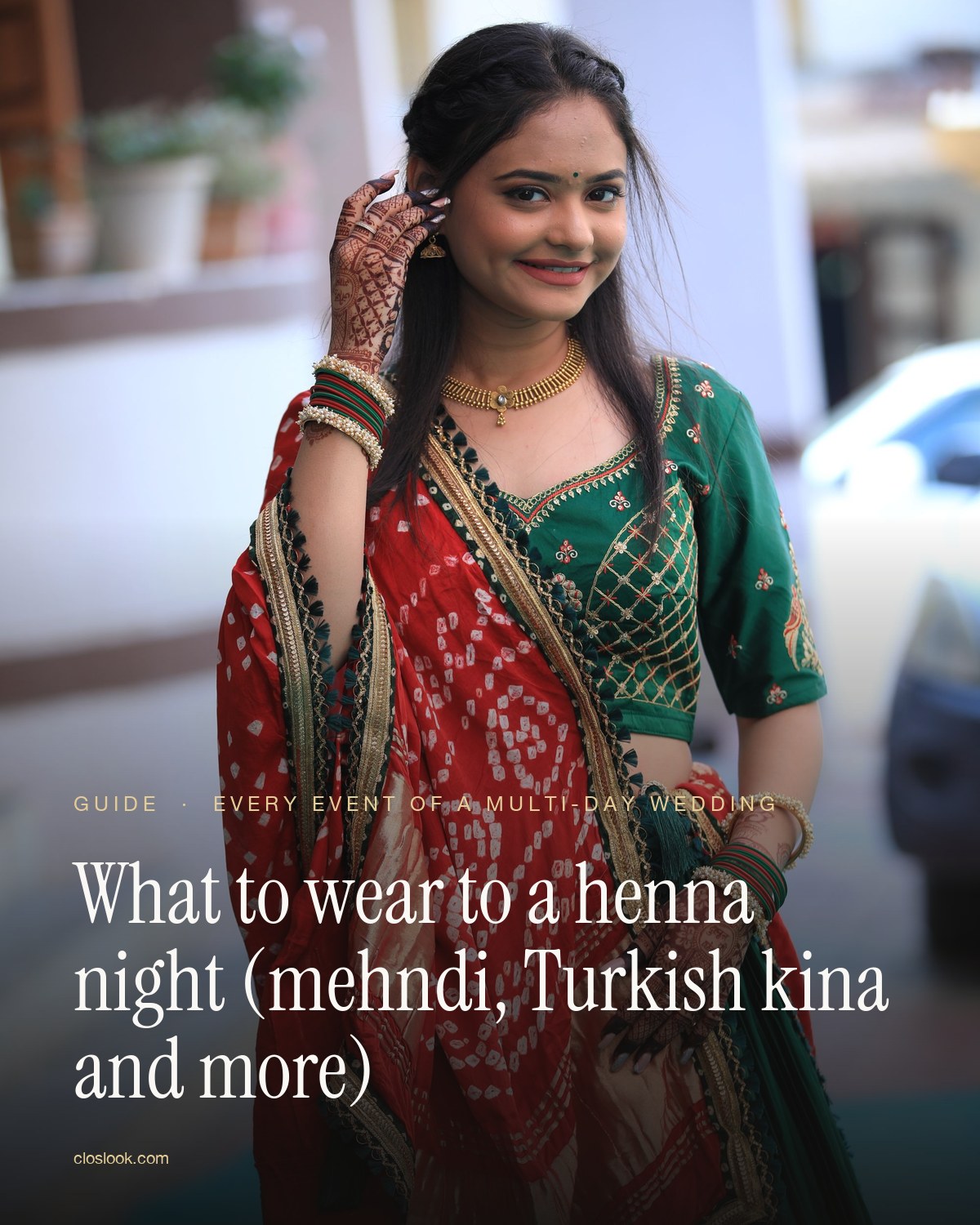
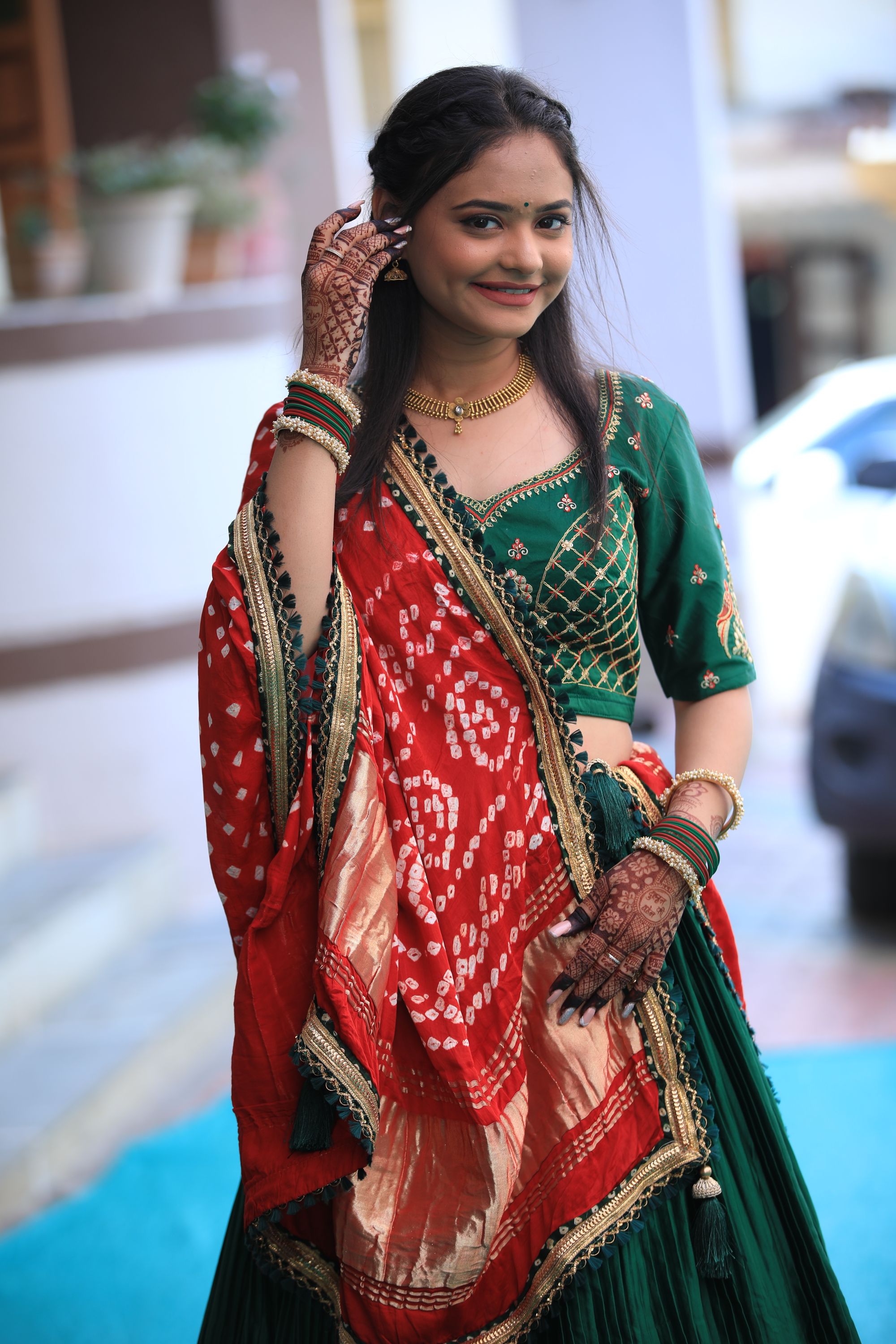
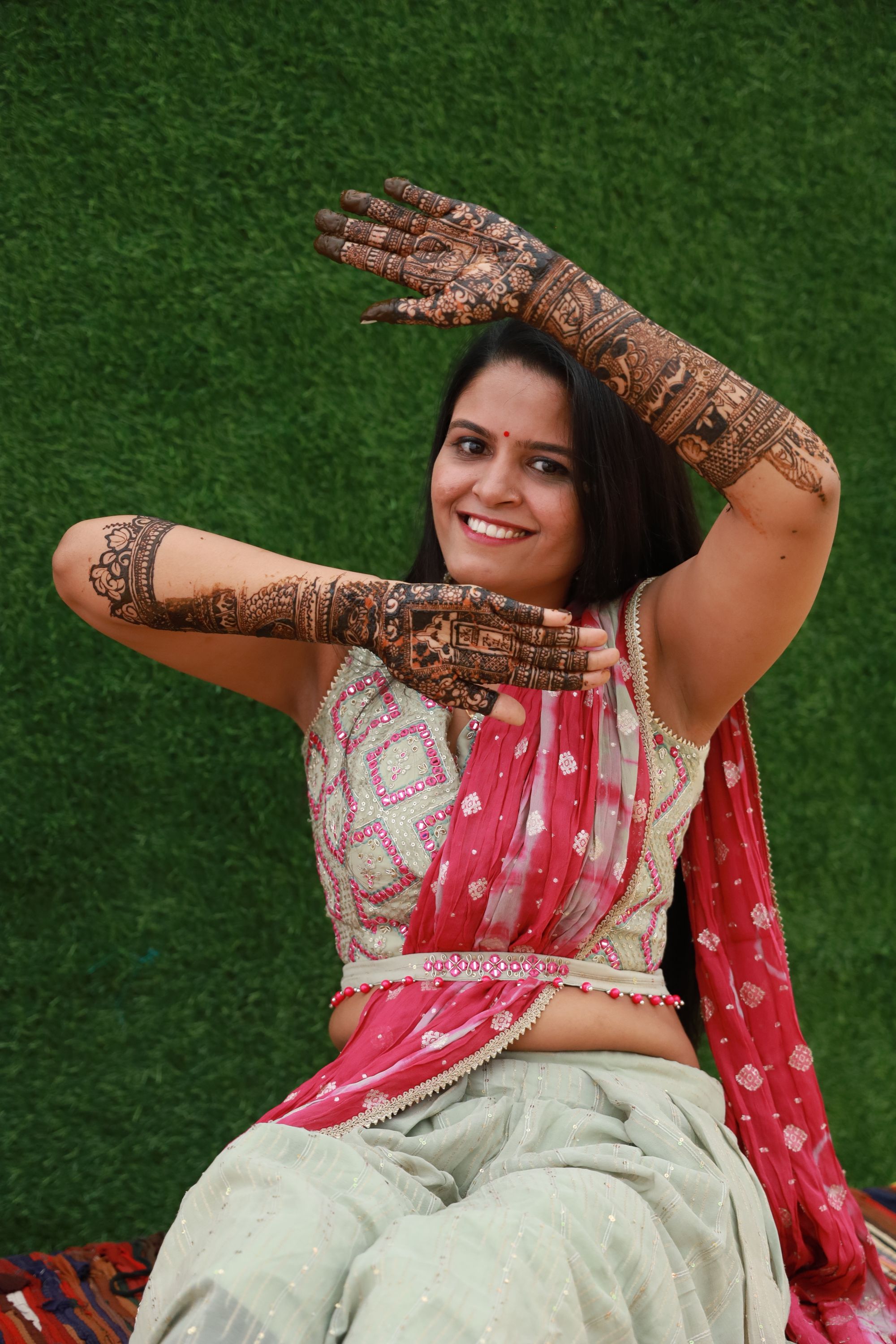
The mehndi is part of many Indian, Pakistani and Bangladeshi weddings. Guides favour bright, festive colours, with green a popular choice, and advise against bridal red. White and black can look too subdued.
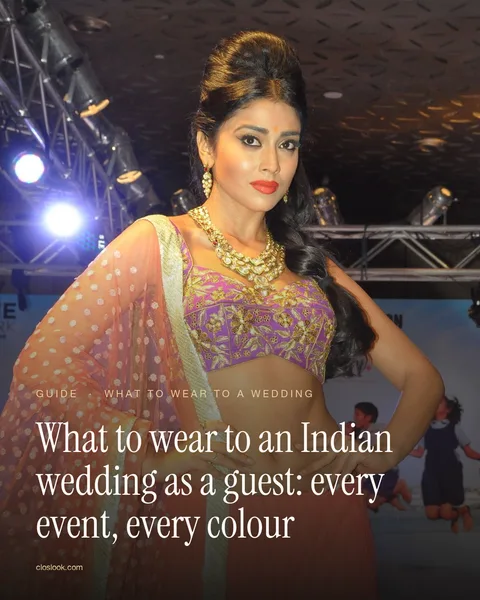
Women: lehengas, shararas, salwar suits, sarees or a festive Western dress.
Men: a kurta with trousers, or a smart shirt if the family prefers a relaxed mood.
Sleeves: if you're getting henna, short or three-quarter sleeves keep your arms free. Keep jewellery light, particularly bracelets and rings, so nothing gets in the way of the design.
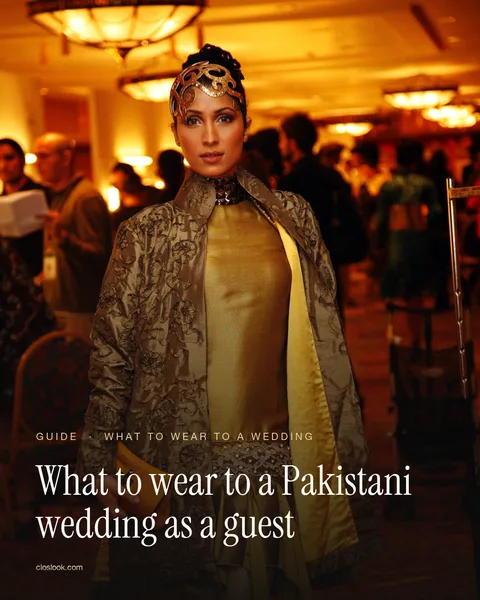
How to wear it: a green or yellow sharara with small earrings and embellished flats is easy to sit and dance in. For more, read our Pakistani and Indian wedding guides.
Turkish henna night (kına gecesi)
The Turkish henna night is held shortly before the wedding. The bride traditionally wears red, either an embroidered gown or robe or a modern red dress, and guests join in the music, dancing and the henna ritual.
What guests wear: dressy, festive evening clothes, often in bright colours. Close friends of the bride sometimes coordinate their dresses. Mothers of the couple dress especially smartly.
How to wear it: a jewel-toned midi or long dress with dancing shoes works well. Avoid red unless the family tells you otherwise.
Kaftans and other henna traditions
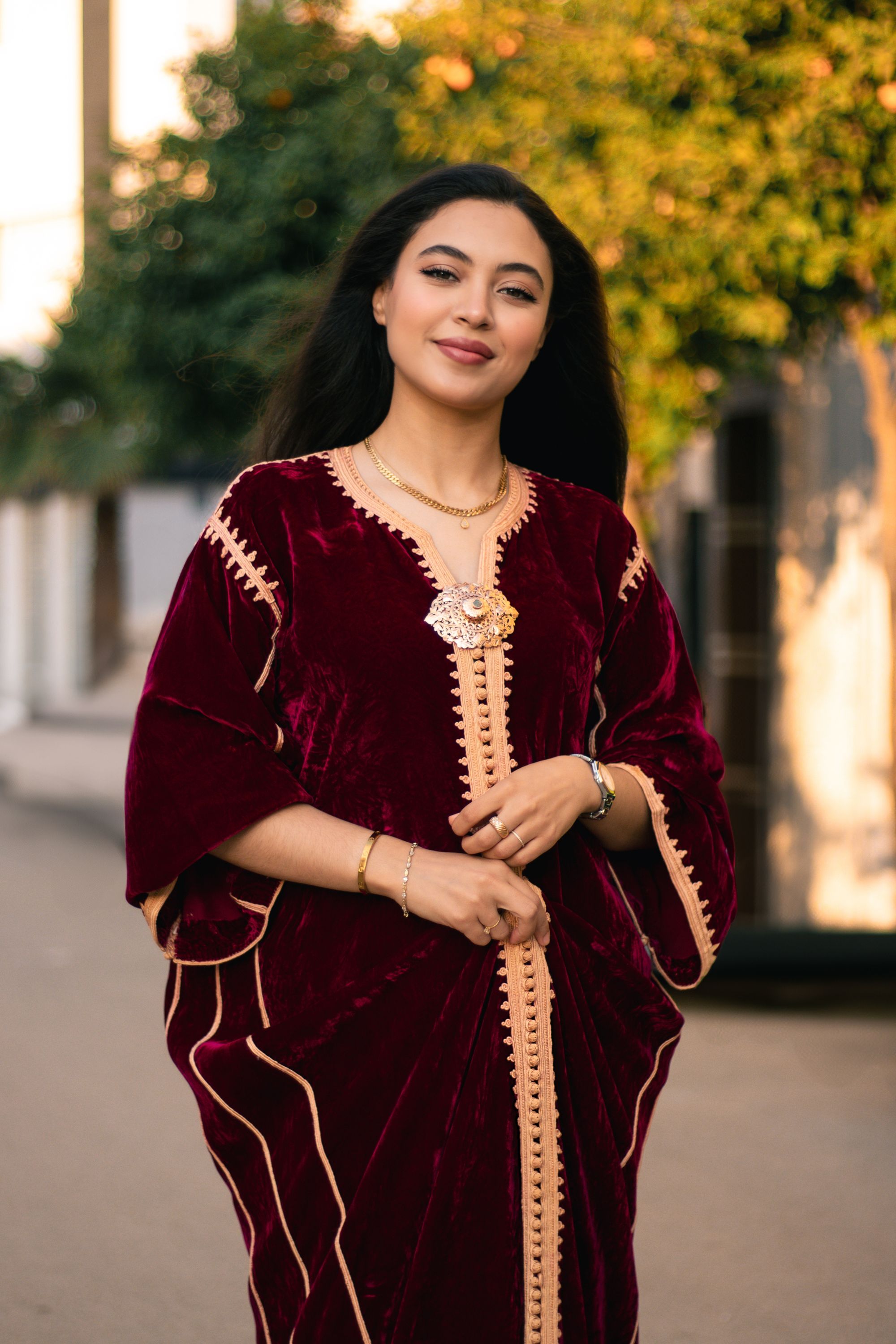
Henna celebrations are also part of weddings in Morocco, the wider Arab world and elsewhere. Customs and dress differ from region to region and family to family, so ask the hosts what guests wear. An embroidered kaftan or a long, elegant dress is a graceful option when the hosts suggest traditional style. See our Arab wedding guide.
Fabrics and fit
- Choose breathable fabric for crowded rooms and warm evenings.
- Pick darker or patterned lower layers if you're worried about stains.
- Make sure sleeves can be pushed up and stay there.
- Avoid very long, trailing hems if you'll be sitting on cushions.
- Wear a skirt or trousers that let you sit cross-legged comfortably.
Shoes and accessories
You may be asked to remove your shoes in a family home, so choose a pair that slips off easily. Flats or low heels are ideal. Add bangles, statement earrings or a small hair accessory for a festive finish. A small crossbody or wristlet keeps your hands free while henna dries.
Looking after your henna
- Let the paste dry fully before touching anything.
- Keep sleeves and scarves away from the design.
- Follow the artist's advice about removing the paste and avoiding water.
- Ask what's in the paste. Natural henna stains orange to brown. "Black henna" can contain chemicals that irritate skin, so avoid it.
What to bring
- A light wrap.
- Wipes for stray paste.
- A hair tie, so you don't need to touch your hair with wet hands.
- Flat shoes for dancing.
Quick outfit ideas
- A green sharara with gold earrings.
- A marigold maxi with cap sleeves and flat sandals.
- A turquoise kurta set with bangles.
- A burgundy velvet kaftan for a winter evening.
- For men: a pastel kurta and loafers.
Choosing your colour
Bright colours suit the mood of a henna night. Green is a favourite for mehndi, while yellow, orange, pink, turquoise and purple are lively alternatives. If the hosts set a theme, follow it: matching colours make the photos look wonderful. When in doubt, ask a family member which shade the bride is wearing and choose something clearly different.
Dressing for the setting
- At home: a comfortable kurta set, a simple kaftan or a relaxed dress. Expect to take your shoes off.
- In a banquet hall: dressier fabrics, embroidery and statement earrings are welcome.
- Outdoors: breathable fabric, flat shoes and a light shawl for the evening.
- Daytime gathering: lighter shades and less sparkle.
If you're close to the bride
Sisters, cousins and best friends are often asked to dance or help with the ritual, and sometimes to match each other. Agree on colours and styles early so there's time for tailoring. Choose an outfit that lets you move, kneel and carry trays without fuss.
What if you only have Western clothes?
A colourful midi or maxi dress, a jumpsuit or a bright blouse with wide trousers will fit in at most gatherings unless the invitation asks for traditional dress. Add festive jewellery to bring the look closer to the mood. Avoid sportswear, ripped denim and very plain office clothes.
For men
If men are invited, a kurta, a smart shirt with trousers or a lightweight suit all work, depending on the family and venue. Bright pocket squares or a coloured kurta show you've joined in.
Gifts and manners
Bring a small gift or sweets if the family custom calls for it, and ask before photographing the bride or the henna ceremony. Wait for an invitation to join a dance or ritual, and be patient: henna takes time, so a queue for the artist is normal.
Quick checklist
- Read the invitation for theme and dress style.
- Plan how you'll get home while your henna is still drying.
- Choose sleeves that stay out of the way.
- Pack flat shoes and a wrap.
- Leave delicate heirlooms that could catch on paste at home.
- Ask the family if you're unsure.
Common mistakes to avoid
- Long, wide sleeves. They drag through wet paste and smudge designs.
- Pale, delicate fabric. Henna stains are very hard to remove.
- Tight clothes you can't sit in. Floor seating is common at family gatherings.
- Wearing the bride's colour. Check with the family before choosing red.
- Heavy rings and bracelets. Remove them before the artist starts.
- Forgetting a hair tie. Loose hair can brush against wet paste.
- Rushing off. Paste needs time to dry, so plan your journey home with that in mind.
The short version
Go bright, comfortable and practical. Keep arms free for henna, protect your clothes, avoid the bride's red where that's the custom, and ask the family about anything unfamiliar.
Still deciding? Try Help me choose, or our lehenga colour finder.