A wedding in the Gulf is one of the most glamorous invitations you can receive. Weddings in Saudi Arabia, the UAE, Qatar, Bahrain, Oman and Kuwait are known for grand venues, warm hospitality and guest lists that can run into the hundreds. Getting dressed for one is a real occasion, and a few customs are worth knowing before you go.
This guide focuses on Khaleeji (Gulf) weddings. The Arab world is large and diverse, and weddings in North Africa, the Levant or Arab families abroad can be quite different, including mixed rather than separate celebrations. Treat this as a starting point and ask your hosts.
Separate halls for men and women
At many Gulf weddings, men and women celebrate separately, in different halls, sections or even venues. The NÓRA guide to Khaleeji style says this keeps cultural and religious customs while letting women dress more freely once inside the women-only space.
This shapes everything about what you wear:
- Women dress for a room of other women: glamorous, colourful and festive.
- Men dress for a formal, conservative gathering.
How to wear it: don't expect your partner to see your outfit, and don't plan a couple's colour match. You'll probably spend the evening apart.
Arriving: the abaya moment
Many local women arrive wearing an abaya, a long, flowing cloak, often with a hijab or shayla covering the hair. Inside the women's hall they take it off to reveal their outfit. The NÓRA guide describes this as part of the entrance ritual: the move from public to private space.
As a visitor you're not usually expected to own an abaya. But it's polite to arrive covered if you'll walk through a hotel lobby or other public area: a long coat, a wrap, or an outfit with sleeves.
How to wear it: carry a large, elegant wrap or a light long coat. It covers you on arrival and comes off once you're inside.
What women wear inside
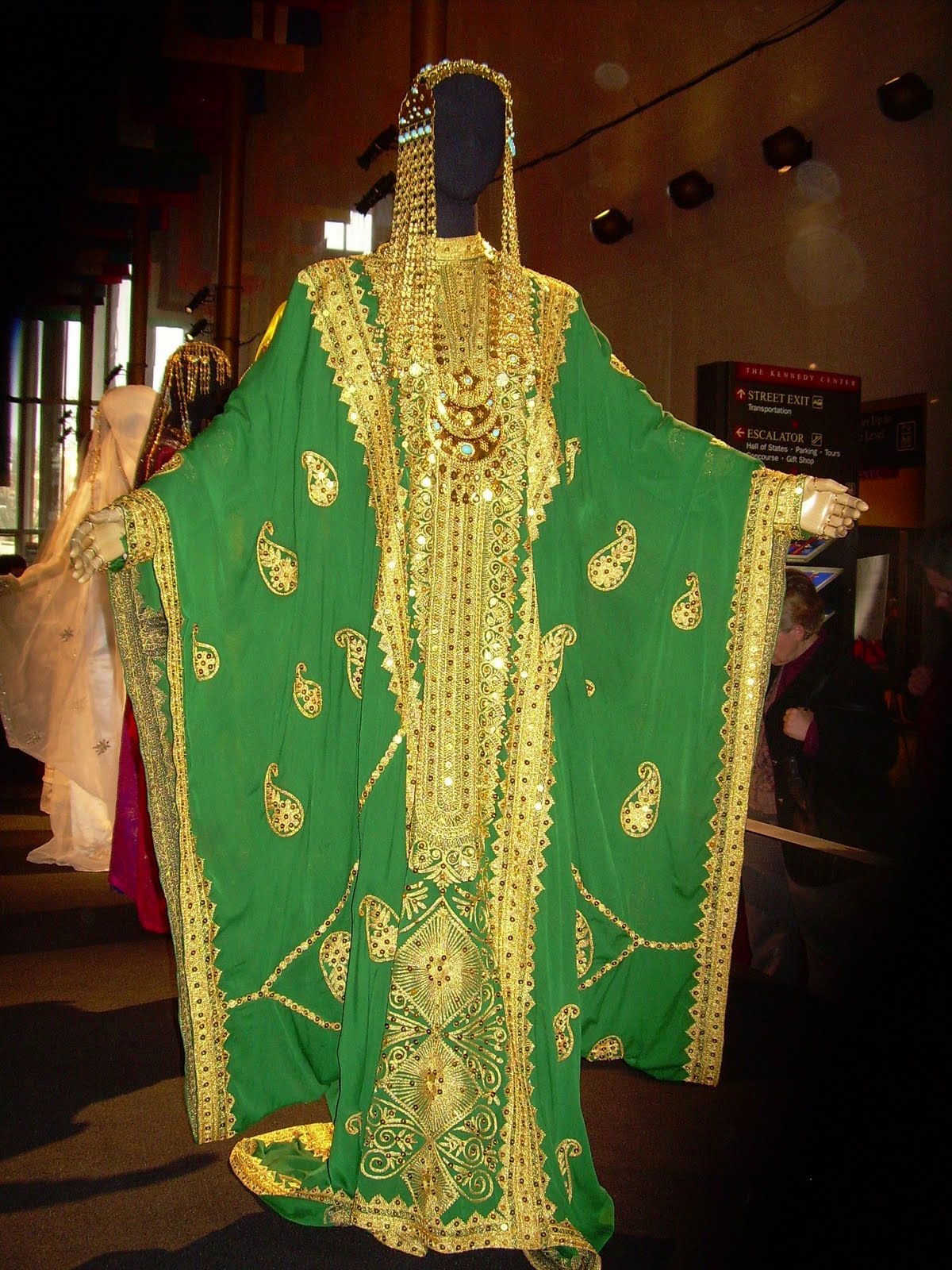
Once inside the women's hall, the dress code is luxury and glamour. The NÓRA guide encourages bold, statement pieces you might not wear day to day.
Gowns and sets.
- A long, formal gown is the classic choice.
- A modest, elegant set (a flowing top with a long skirt or wide trousers) works if you prefer more coverage.
- Harper's Bazaar Arabia suggests modern options too: a sharp column gown, a one-shoulder dress with a clean line, or even a satin-lapel tuxedo or tailored trousers for a ballroom wedding.
Fabrics: silk, satin and chiffon are popular. Beading, sequins and embroidery are encouraged.
Colours: jewel tones, metallics, rich deep shades and soft pastels all work. Avoid anything that looks bridal, such as creamy whites or a dress "waiting for a bouquet", in the words of Harper's Bazaar Arabia. See our guide Can you wear white to a wedding?.
How much skin? Abu Dhabi cultural adviser Ali Al Saloom, writing in The National, tells guests not to worry too much about revealing clothing, because women celebrate separately. But there is a limit: older women will be present, and you should show respect in how you talk, move and dress. Don't be surprised if some local guests wear quite open styles inside, he adds, because they cover up with an abaya in public.
How to wear it: a safe balance is elegant and covered enough: sleeves or a wrap, a neckline that isn't very low, and a long hemline. Then go big on fabric, colour and jewellery.
Shoes, jewellery, hair and make-up
- Shoes: high heels are the norm, but these are long evenings with dancing, so choose a pair you can wear for hours. For a garden wedding, Harper's Bazaar Arabia suggests stable shoes such as a low slingback, a shaped sandal or a smart flat, because you may walk on grass, marble or gravel.
- Jewellery: jewellery plays a big part. Statement earrings, stacked bracelets or a bold necklace all fit, but choose one strong piece rather than a heavy necklace with a heavy dress.
- Hair and make-up: glamorous but balanced: soft waves or an elegant updo, with bold lips or a smoky eye.
Mistakes to avoid, according to the NÓRA guide: overdoing the sparkle, ignoring the dress code, and shoes you can't stand in all night.
What men wear
In the men's section the dress code is formal and conservative.
- Local guests usually wear the thobe or dishdasha (called a kandura in the UAE), with a head covering such as the ghutra or shemagh.
- Visiting men can wear a well-fitted dark suit, a pressed shirt and a tie, with polished leather shoes. Keep it classic and understated.
- Avoid shorts, T-shirts, jeans and anything flashy.
Etiquette for first-time guests
- Gifts: not required, but appreciated. The National's adviser suggests a nice watch, a box of perfume or something special from your home country, in nice wrapping with a greeting card, so the couple know who to thank.
- Bringing a friend: he notes it is generally acceptable to come with a friend or family member, because hosts expect that an invitation may bring an extra guest. If in doubt, ask.
- Mixing and dancing: in the women's hall you can chat, hug, laugh and dance. Expect mainly Arabic music.
- When unsure, ask. Each wedding may have its own guidelines. Check with the host, and lean formal if in doubt.
Seasons and venues
Gulf weddings move between ballrooms, gardens and desert resorts. Harper's Bazaar Arabia's advice:
- Ballroom: longer, sleeker, more architectural gowns, or sharp tailoring.
- Garden: lighter fabrics that move: silk that doesn't cling, organza, a fluid column dress, or chic separates.
- Black tie: formal, with one interesting detail rather than lots of decoration.
The short version
Women: arrive covered, then reveal a glamorous gown or elegant set in a rich fabric, with comfortable heels and one statement jewel. Stay respectful in front of older guests, and skip anything bridal. Men: a thobe and head covering, or a dark suit and tie. Bring a small gift, and ask the hosts if anything is unclear.
Planning your look? Try Help me choose, or read our guide to black tie optional attire.