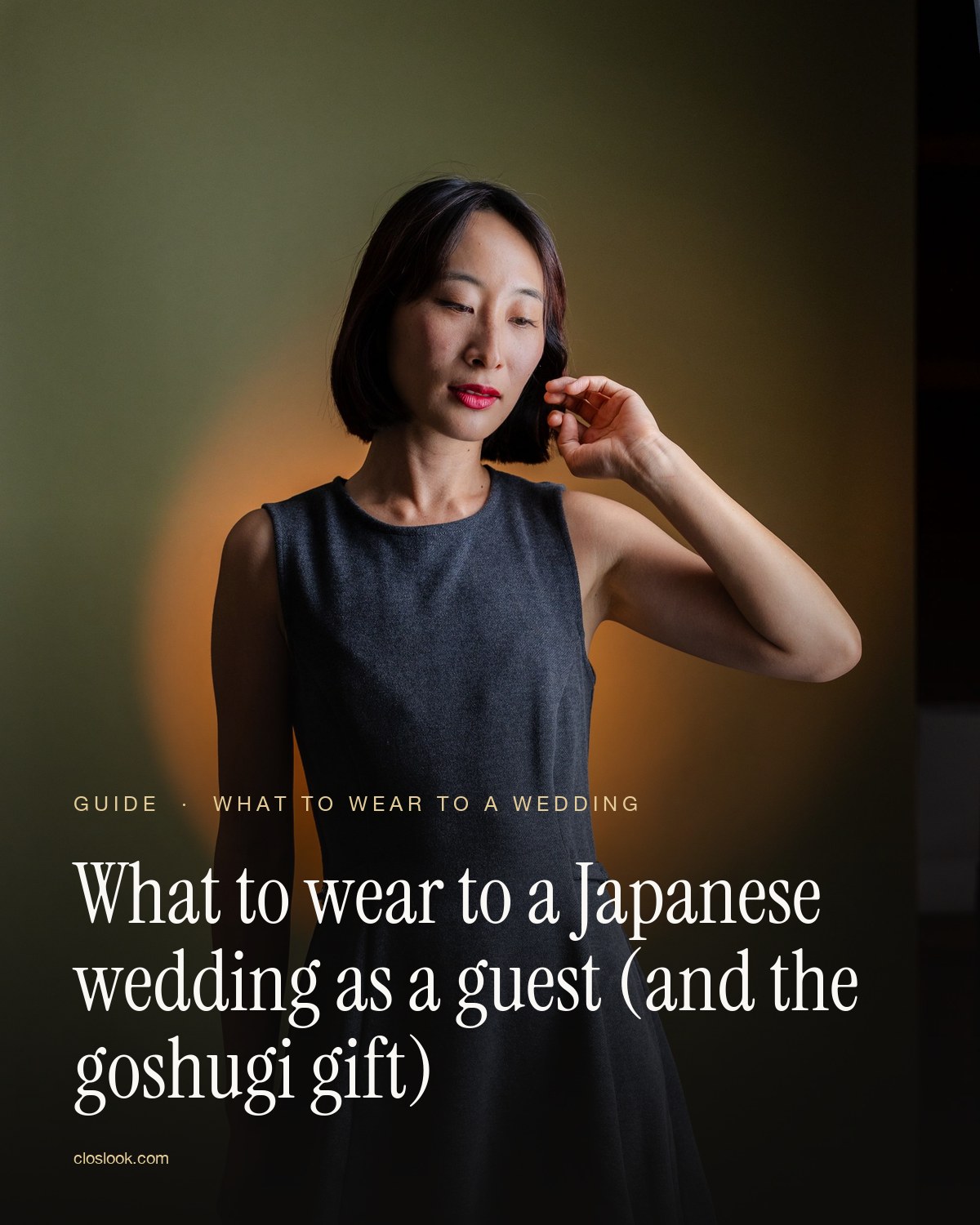
Japanese weddings are elegant and carefully organised. Many include a Shinto or chapel-style ceremony followed by a seated reception with speeches and toasts, and guests are expected to look polished and restrained.


The overall approach
Dress up, and keep it refined. Customs vary between regions and families, so if you know other guests, ask them what they're wearing. When the invitation says daytime attire, it still means formal clothing.
How to wear it: choose quality and fit over glitter, and aim not to outshine the couple.
What women can wear
- A knee-length to midi dress, in pastel or jewel tones.
- A subtle black dress, softened with light accessories.
- Covered knees and shoulders. For daytime, wear a bolero or shawl over a sleeveless dress.
- A modest neckline.
- Closed-toe shoes, typically pumps, with stockings rather than bare legs.
- Long hair pinned up.
Avoid pure white, boots and open-toe sandals. Keep jewellery tasteful; guides caution against accessories that compete with the bride.
How to wear it: a teal or navy midi, a pale shawl and closed pumps is a dependable formula.
What men can wear
- A dark suit in black, navy or charcoal.
- A solid white dress shirt.
- A white, silver or light pastel tie. Skip a solid black tie, which belongs at funerals.
- Black lace-up leather shoes and long black socks.
A well-pressed suit matters more than fashion detail. Wear a clean white handkerchief if you like.
Kimono
Some guests, often relatives, wear formal kimono. If you aren't used to wearing one, you'd need help dressing and a suitable type for the occasion. Foreign guests don't need to wear kimono; a formal dress or suit is perfectly appropriate.
Colours to avoid
- White: for the bride.
- Solid black ties: funeral associations.
- Very flashy neon shades: keep tones calm.
The goshugi gift
Guests give cash in a decorative envelope, called a goshugi-bukuro or shuugi-bukuro.
- Amount: guides suggest around 30,000 yen for friends and colleagues, about 10,000 yen for students and around 50,000 for close relatives or a boss.
- Numbers: avoid even amounts, which suggest splitting, and avoid 40,000 and 90,000 because four and nine sound like death and suffering. Some guides note 80,000 as an exception.
- Bills: use crisp new notes.
- Envelope: it often carries kotobuki or oiwai on the front. Avoid grey, black or white-and-yellow knot cords, used for funerals.
- Inside: guides advise placing the portrait side of the bill facing the front, and writing your name and address on the back.
- Handing it over: give it at the reception desk with both hands after a small bow, with a greeting such as Omedetou gozaimasu ("congratulations").
Match the envelope's decoration to the amount: a small sum in a very elaborate envelope is awkward. Some weddings use a fixed fee instead, so check the invitation.
Replying to the invitation
On a paper reply card, cross out the option that doesn't apply and the honorific characters placed before your own response. Write in black ink. If you can't attend, a card and a smaller gift are a kind gesture.
Reception manners
- Arrive 20 to 30 minutes early.
- Sit down from the left side of your chair.
- Join the toast, kanpai.
- At the end of the meal, leave the napkin loosely folded; a perfect fold can suggest dissatisfaction.
- Avoid words associated with parting, such as cut, leave or return, and repeated words, in speeches.
- Take home the return gift (hikidemono) the couple give.
Weddings outside Japan
Japanese couples marrying abroad may combine local customs with Japanese ones. Follow their invitation, and keep the same restrained approach.
Season and venue
Summers in Japan are hot and humid, so choose breathable fabric and bring a fan; venues are usually air-conditioned, so keep your shawl. In winter, wear a smart coat that you can check at the venue. Shrines may involve walking on gravel, so choose stable shoes.
Sample outfits
- Daytime chapel: a sage midi, white shawl and nude pumps.
- Evening reception: a navy dress with pearl earrings.
- Man: charcoal suit, white shirt, silver tie and black oxfords.
Common mistakes
- Wearing white or a black tie.
- Bare shoulders at a daytime ceremony.
- Casual shoes or sandals.
- Giving worn notes or an unlucky amount.
A quick checklist
- Reply card completed properly.
- Envelope and new bills ready.
- Shoulders covered for daytime.
- Closed shoes polished.
Reading the invitation
Japanese invitations usually arrive with a reply card and clear timings. Note whether you're invited to the ceremony, the reception (hirōen) or only a later, more casual party. A ceremony and seated reception call for the most formal clothes; an after-party is more relaxed, though still smart. If the invitation mentions a dress code, follow it exactly.
Outfits by event
Daytime ceremony and reception. A midi dress with sleeves or a shawl, closed pumps and a small bag. Keep sparkle low in daylight.
Evening reception. Deeper colours, a little shine and slightly dressier jewellery are welcome, while keeping knees covered and tones calm.
After-party. A neat dress, blouse and skirt, or a jacket and trousers. Many guests keep their formal outfit on and simply remove the shawl.
Accessories
Choose a compact clutch rather than a large tote; leave bigger bags and coats at the cloakroom. Pearls are a classic and understated choice. Keep perfume light, since guests sit close together. If you carry a fan or handkerchief, pick one in a soft colour.
Hair and makeup
Pin long hair up or tie it back neatly, as guides suggest, and avoid very large ornaments that block the view of people behind you. Soft, polished makeup suits the occasion.
Coats and weather
Take your coat and scarf off before entering the reception room and leave them at the cloakroom. Pack a spare pair of stockings, and in the rainy season carry a compact umbrella and shoes that cope with wet pavements.
For men: details that count
Check that your shirt collar is crisp, your trousers sit cleanly on the shoes and the socks are long enough that no skin shows when you sit. A subtle pocket square is fine. A formal watch or none at all looks neater than a sports watch.
Foreign guests
You won't be expected to know every rule, and hosts appreciate effort. Ask a friend what the other guests are wearing, bring the envelope if the couple expect gift money and follow what people around you do during toasts and ceremonies. If you're asked to give a speech, keep it warm and short, and avoid the words linked with parting.
Planning ahead
Buy the envelope and new bills early; banks can provide crisp notes. Try on the full outfit, including stockings and shoes, and sit down in it, since the reception involves a long meal.
Gift envelope checklist
- The right envelope for the amount.
- New notes, facing correctly.
- Your name and address written clearly.
- Carried flat in a cloth or clutch so it stays crisp.
- Handed over at reception with both hands.
If you're unsure
Ask the couple or a Japanese friend. Practices differ between generations and venues.
The short version
Formal and understated: a modest midi dress or a dark suit with a pale tie, closed shoes, no white, and gift money presented properly.
Still deciding? Try Help me choose.