A modern Korean wedding is quick, polished and very well organised. Most take place in a wedding hall booked for a fixed time slot, and Go! Go! Hanguk notes the ceremony lasts up to an hour, followed by a buffet. The Knot says the ceremony itself is often 30 minutes or less.
Because it moves fast and many guests are colleagues or family friends of the parents, the guest dress code is quietly formal. Korea JoongAng Daily even has a name for it: the "hagaek look", the guest look. Here's how to get it right.
The guest look: polished and muted
Korea JoongAng Daily describes the ideal guest outfit as muted in tone. Anything too shiny, too revealing or too colourful is discouraged, because the day belongs to the couple and their parents, who are the hosts (the "honju"). Go! Go! Hanguk agrees: the dress code is formal and conservative, in darker or neutral colours.
That doesn't mean dull. The JoongAng Daily suggests accessories as the place for a fashionable touch: a good bag, earrings or a scarf.
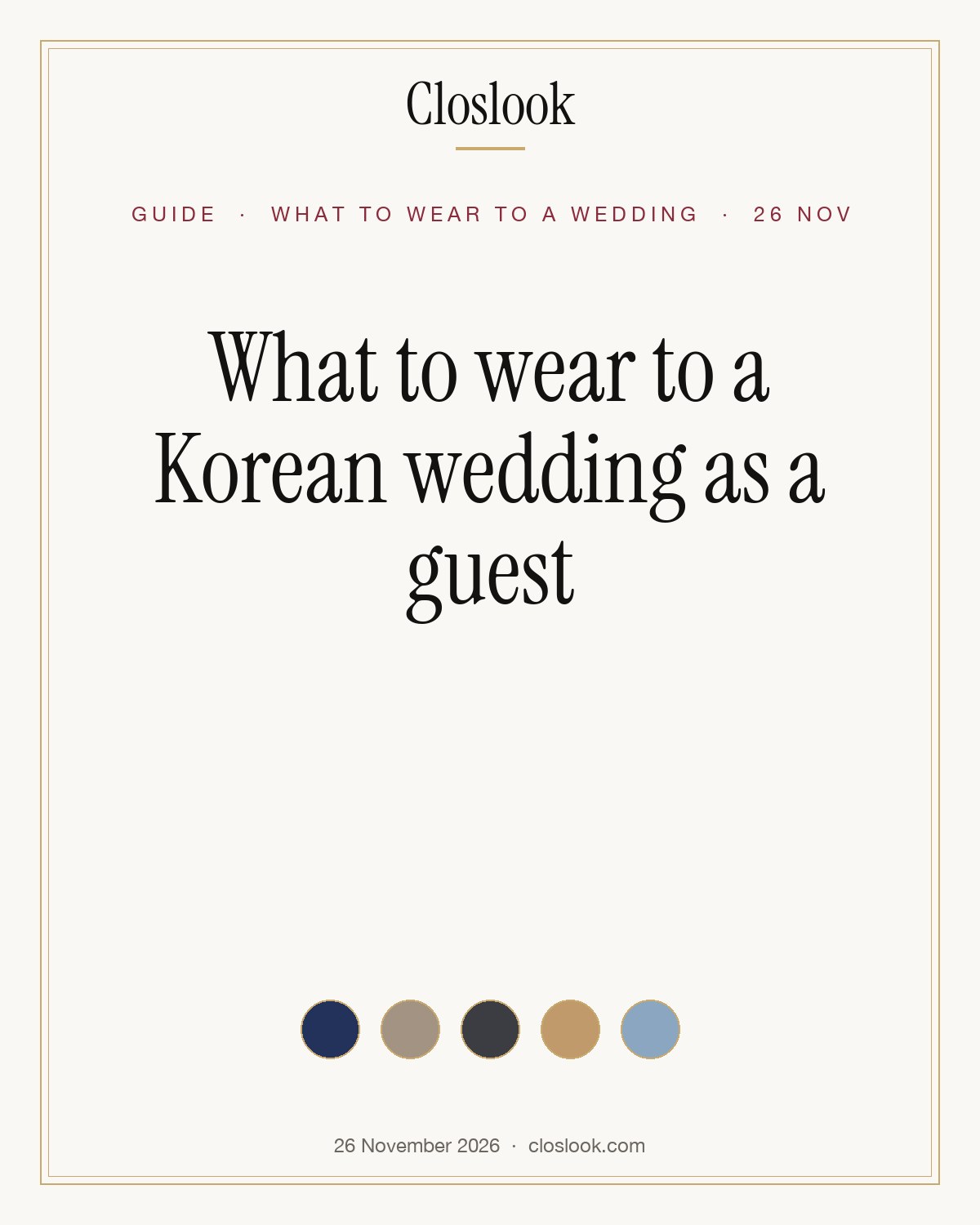
Good colours:
- Navy, charcoal, grey and taupe.
- Camel, beige (clearly not ivory) and soft brown.
- Muted blues and dusty, greyed tones.
What to avoid
- White. It's the bride's colour, and forbidden for guests, says the JoongAng Daily. Skip ivory and cream too.
- Head-to-toe black. Dark colours are welcome, but an all-black outfit is frowned upon because it can look like funeral clothes. Add a lighter blouse, a soft-coloured jacket or a bright accessory.
- The mothers' colours. The Knot explains that the groom's mother traditionally wears light blue or green and the bride's mother pink or purple, and guests should avoid those colours. In practice that means avoiding outfits that could be mistaken for the family's, especially anything hanbok-like in those shades.
- Shine, sparkle and big prints. Sequins, metallics and loud patterns pull focus.
- Revealing clothes. Very short hems, low necklines and bare backs.
What women can wear
- A modest dress: knee-length or midi, with a simple shape and covered shoulders, or a light jacket over it.
- A blouse and skirt: a silk or crepe blouse with a midi skirt is a very common choice.
- A trouser suit: tailored trousers and a matching jacket in navy, grey or camel look sharp and modern.
- A tweed or structured jacket over a dress for cooler months.
- Shoes: low heels or smart flats. You'll be standing, greeting and moving between the hall and the dining room.
- Accessories: pearls, small gold jewellery or a quality bag lift a simple outfit without breaking the rules.
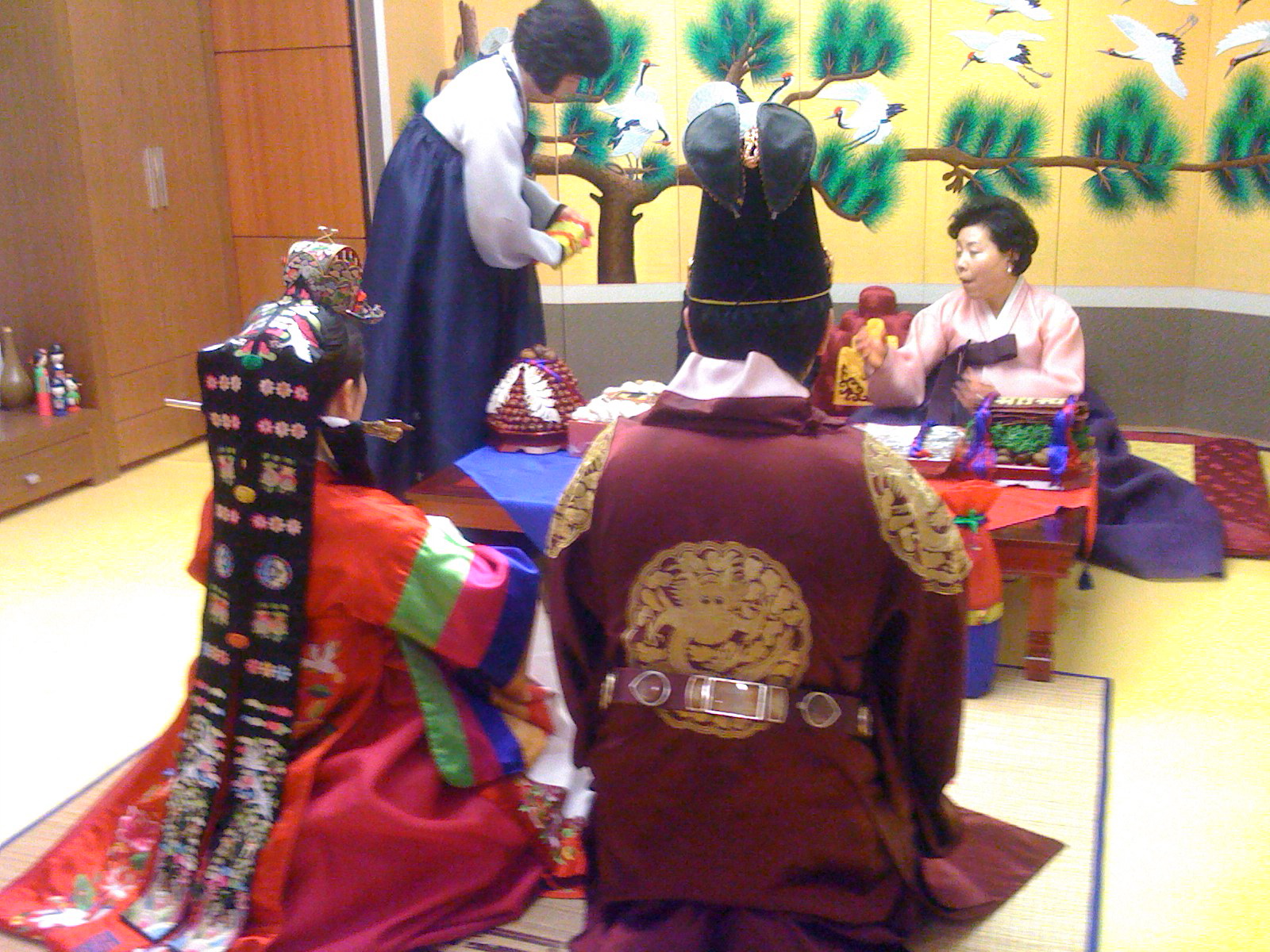
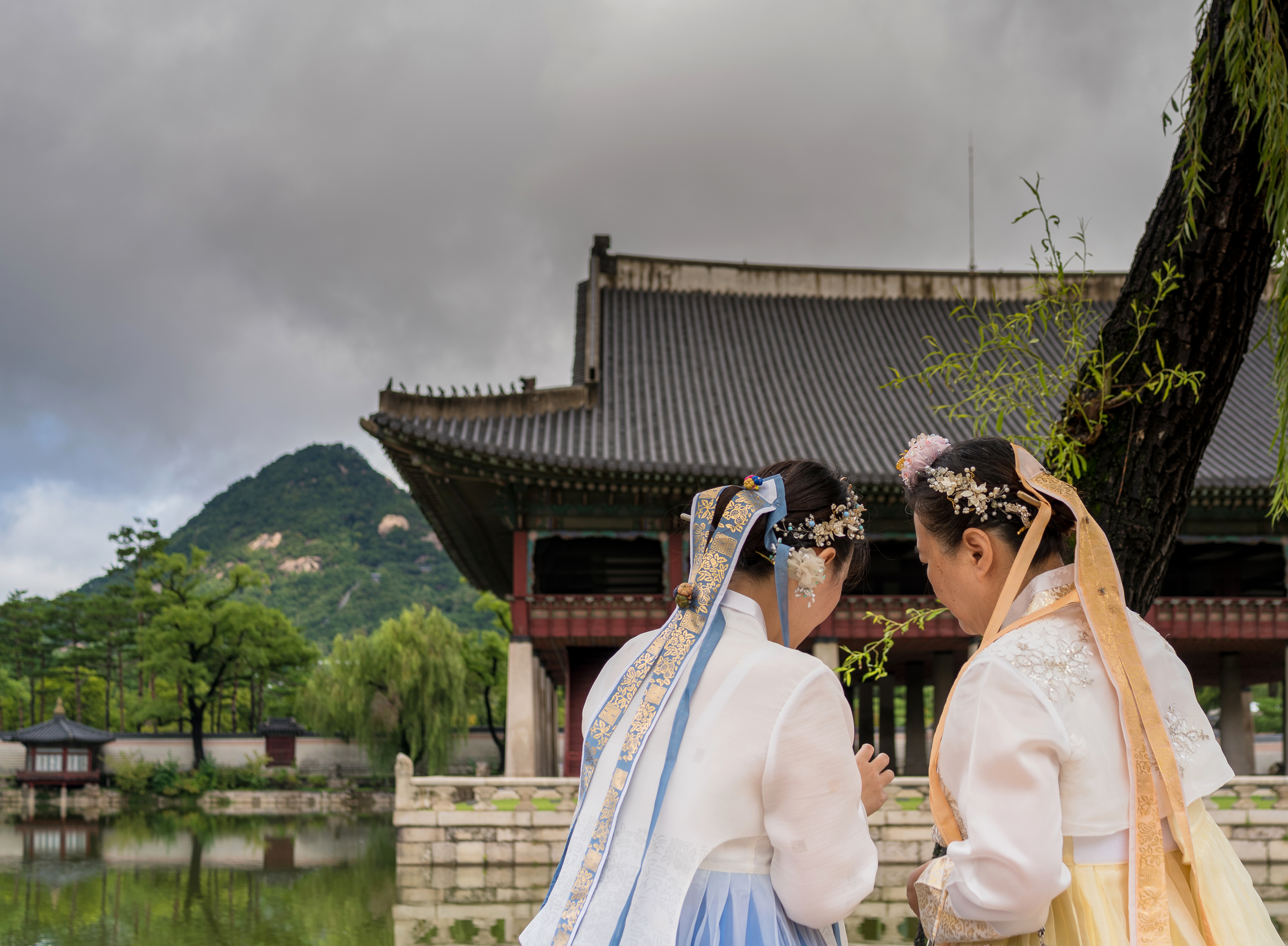
Should guests wear a hanbok? Usually not. The couple change into colourful hanbok for the pyebaek, and the mothers wear hanbok in their traditional colours. Guests normally wear Western formal clothes.
What men can wear
- A dark suit: navy, charcoal or black, with a white or pale shirt.
- A tie: a sober tie is the safe choice.
- Shoes: polished leather oxfords or derbies.
- Avoid: jeans, sneakers, loud shirts and anything that looks like a tuxedo. Formal, not flashy, is the goal.
The cash gift
The usual wedding gift in Korea is money, called chuk-ui-geum. Go! Go! Hanguk explains the custom:
- Use new, clean notes in a plain or wedding envelope.
- Write your name on the envelope.
- Hand it in at the reception desk at the entrance, where your name and gift are recorded in a book.
- The amount depends on how close you are to the couple or their parents.
You may be given a meal ticket in return for the buffet.
What happens at the wedding
Knowing the order of the day helps you arrive on time and dress for it:
- Arrival: greet the couple and their parents, hand in your envelope and find your seat in the hall.
- The ceremony: the mothers often begin it by lighting candles, The Knot says. The couple then walk in, exchange vows, and there may be a speech, a song and photos.
- Group photos: guests are often invited up for a photo with the couple. Another reason to dress neatly.
- The pyebaek: after the main ceremony, the couple change into colourful hanbok and bow to their families in a smaller room. Wikipedia notes it was traditionally for close family only. The parents toss jujubes (dates) and chestnuts, and the bride tries to catch them in her skirt: the number caught is said to predict how many children the couple will have.
- The meal: a buffet, often in a separate dining room. Go! Go! Hanguk says it's perfectly polite to leave after eating, once you've greeted the couple.
Before the wedding: the hahm
You might hear about the hahm, a box of gifts carried to the bride's family by the groom's friends before the wedding, The Knot explains. It's a fun tradition, but guests don't need to do anything for it.
Weddings outside Korea
At a Korean or Korean-American wedding abroad, the couple may follow the local dress code on their invitation, such as cocktail or black tie. Follow it, but keep the Korean customs in mind: no white, not all black, and nothing that could be confused with the families' hanbok colours. If you're unsure, ask the couple.
Seasons in Korea
Korea has four distinct seasons, and weddings happen all year, so dress for the weather as well as the code:
- Spring and autumn: the most popular wedding seasons. A light trench or tailored jacket over a dress or blouse is ideal.
- Summer: hot and humid. Choose breathable fabrics like cotton or linen blends in muted tones, and keep shoulders covered with a light cardigan inside the cool hall.
- Winter: very cold. Wear a wool coat, which you can leave at the cloakroom, and a fine knit or wool dress underneath. Dark tones are fine, but add a soft colour so the outfit isn't all black.
Quick etiquette tips
- Arrive early. Halls run to a tight schedule, and the next wedding may start soon after yours.
- Greet the parents. They are the hosts, and many guests are their friends or colleagues.
- Keep your phone quiet during the ceremony.
- Join the group photo if you're invited up.
- Don't upstage the families. A simple outfit shows respect, which is exactly the point of the guest look.
The short version
Dress formally and quietly: a modest dress, blouse and skirt, or trouser suit for women; a dark suit and tie for men. Choose navy, grey, camel or muted tones, add one nice accessory, and skip white, all-black, shine and the mothers' colours. Bring a cash gift in a clean envelope, and enjoy a short ceremony, a colourful pyebaek and a good buffet.
Still deciding? Try Help me choose, or read our guide to Chinese weddings.