A Nigerian wedding invitation may give you a dress code, a colour, the name of a fabric or a contact for a particular group of guests. It may also cover several events. Start with the one you’ll attend. Dress instructions for a traditional ceremony, a religious service and an evening reception can differ, even when they take place on the same day.
What aṣọ ẹbí means
Aṣọ ẹbí, also written aso ebi, means family cloth in Yoruba. At a celebration, relatives or friends may wear a shared textile or dress in coordination to show which group they’re there with. The practice has Yoruba roots and is also found among other Nigerian communities and in the diaspora. Families use it in different ways. One might assign a pattern to a group of friends and another to relatives. Another might ask for a particular shade and leave the choice of fabric to the guest.
Aṣọ ẹbí describes the practice and can also refer to the cloth chosen for that celebration. Aṣọ òkè is a woven textile. It can be used for a coordinated outfit or accessory, alongside other possibilities such as lace or a printed cloth. If you’re waiting for instructions about aṣọ ẹbí, ask for the exact fabric or a swatch before settling on a garment. A royal blue lace and a royal blue woven stripe make very different clothes, even if both fit the colour description.
Read the invitation before choosing an outfit
Start by finding the date, venue and dress note for each event you’ll attend. Check the wedding website or any fabric instructions sent separately. If there are different directions for different groups, confirm which applies to you. A label such as traditional attire may need a little more context, particularly for celebrations that draw on more than one family tradition or faith.
If the family is coordinating garments, check whether the agreement covers a full outfit or an accessory. A shared cloth might be used for a dress, a wrapper or a top, for example, while a separate fabric might be intended for a headwrap or cap. Ask if you can choose the cut and if there is a lining colour or trim the group is using. When only a shade is specified, look at a swatch in daylight as well as indoors. Warm indoor lighting can change how a shade reads in a phone photo.
If the invitation gives a general guest dress code and you’ve received no fabric instructions, dress for that code. A solid-colour midi dress, tailored suit or formal separates can work when the invitation allows them. If someone else has already sent you pictures of outfits for a group, check before copying the colours. That group may have its own directions.
Choose a cut that works with the cloth
If your hosts suggest an ìró and bùbá, you’re looking at a wrap skirt and a blouse. A gèlè is a headwrap, and a fìlà is a cap. An agbádá is a flowing outer robe, often worn with a tunic and trousers. Depending on the invitation and the family’s preferences, a tailored tunic set, a lined dress or an elegant skirt and top may be another way to use the fabric. If a garment is unfamiliar, show your tailor both the wedding instructions and a reference for the cut.
With lace, hold the cloth over two or three lining colours before deciding. A lining close to the lace colour gives a more even finish. A deeper lining can make the pattern easier to see. If you’re using a woven stripe or large print, ask how the pattern will land at the front and at the seams. A wide repeat can take more cloth to match across a jacket or skirt. Save any matching material for the accessory named in the invitation before the main garment is cut.
For a long day of sitting, standing and dancing, choose the simplest cut that gets the effect you want. Try the jacket or blouse with the outer layer you’ll actually wear. If you’re considering a wrapper, test how it falls when seated and whether it stays secure on stairs. Try those movements at the fitting so the tailor has time to adjust the hem or add ease.
Dress for the ceremony and the venue
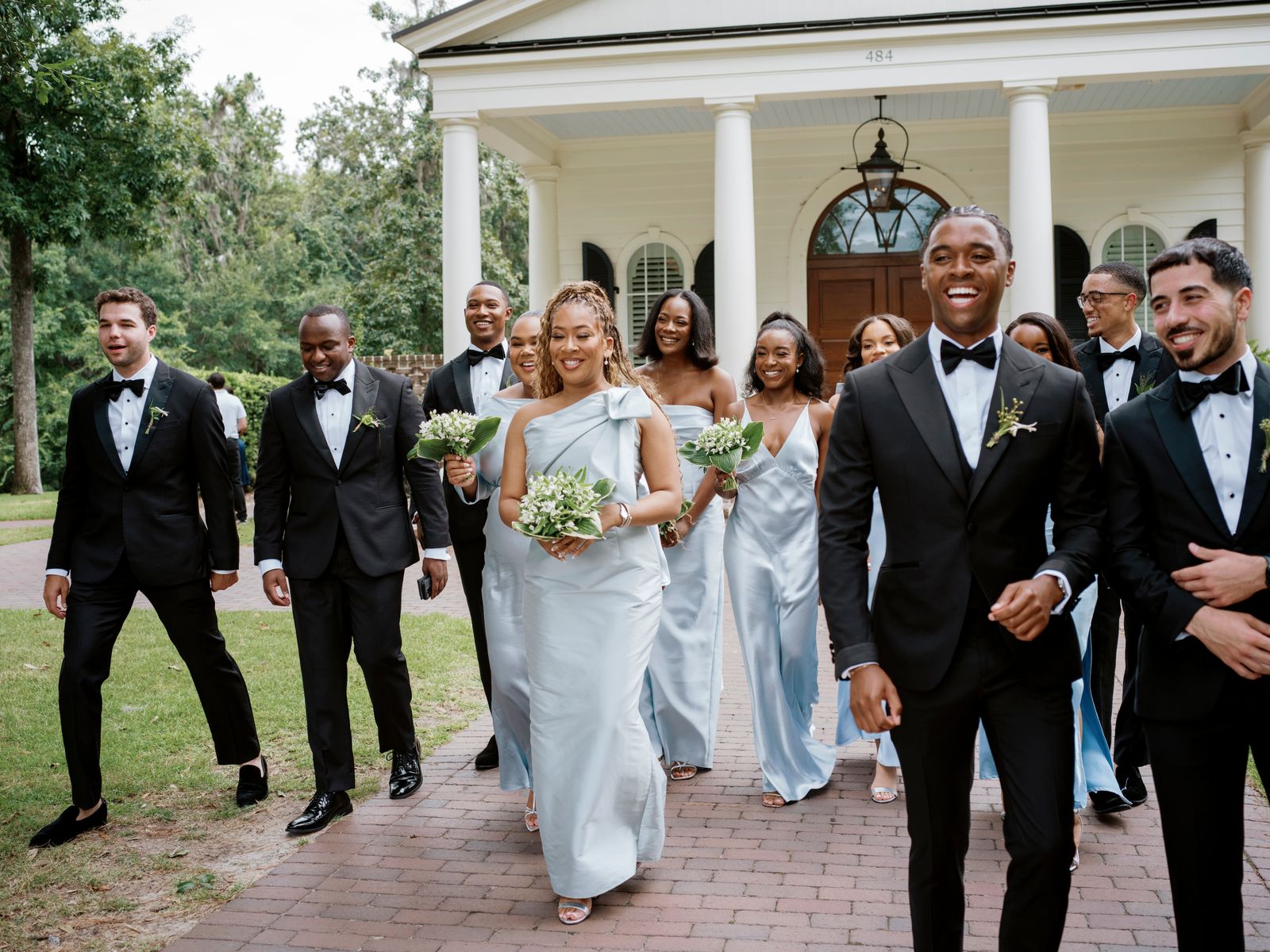
For a traditional ceremony, wear the family’s cloth or the traditional option they’ve suggested. A coordinated group can share a fabric or colour while wearing different cuts, when the hosts leave that choice open. At a celebration drawing on multiple traditions, ask which guidance applies to your event. What worked at someone else’s wedding may have been specific to that family or venue.
For a church service, mosque ceremony or other faith setting, check the venue guidance and wedding instructions together. If a particular covering, hem or footwear arrangement is requested, plan it as part of the outfit. A removable shawl can carry you from a service to a reception when it meets the hosts’ guidance. If there’s a registry appointment as well, check whether it has a separate dress note before packing an extra outfit.
At a reception with an evening dress code, consider an embroidered tunic with straight trousers, a tailored suit, or a lined midi dress with a dressy shoe. If the earlier outfit still fits the evening instructions, change a layer or pair of shoes to suit the next venue. A wrap or jacket that looks deliberate with the clothes is useful when the reception is air conditioned or the evening ends outdoors.
Allow time for fittings and plan your accessories
Confirm when the cloth will be available, especially if you’re travelling. Arrange a fitting early enough to leave time for adjustments and give the tailor your event date. Bring the shoes you intend to wear so the hem can be set accurately. If you can’t do an early fitting in person, a separate fitting for a sample garment or a simple cut with room for adjustments can make planning easier.
If the event asks for a gèlè, practise the wrap or arrange help before the day. Try the finished headwear with your earrings and outer layer to check that you can turn easily and that nothing catches. With a patterned textile or an elaborate wrap, plain shoes and a small bag in one of the cloth’s colours are easy to put together.
Look at the ground as well as the dress code. On grass, gravel or uneven paving, choose dressy flats, low block heels or polished shoes with enough grip. Check that long trousers or a wrapper clear the ground in those shoes. Put on the whole outfit at home and walk, sit and climb a step. You’ll find out quickly whether the sleeve catches on the bag, the hem needs a small lift or the shoes should change.
If the cloth arrives close to the wedding, keep a second outfit ready in a shade the invitation allows. Ask the wedding contact whether a smaller piece, such as a headwrap or cap, is an option for your group. If the hosts expect the full fabric, ask your tailor which cut they can finish with time for a fitting. A straightforward skirt or tunic can leave more time to check hems, fastenings and lining than a garment with multiple layers. If you’re carrying the outfit in a suitcase, pack headwear and any separate sash together so you have all the pieces when you dress.